Did you know that the organic waste we discard every day (like farm/food waste) can be transformed into the biodegradable plastic of tomorrow? Our research is making this a reality by turning agricultural leftovers into high-value biopolymers, which will eventually degrade and turn back to the soil. The future of science is circular, and it starts here!
We transform “trash” into a valuable resource, reducing plastic pollution and fostering a circular economy in the agricultural sector.
We are a dedicated research team from UNIROMA, Sapienza University of Rome (Italy), working at the forefront of biotechnology. Our work focuses on the production of PHA (polyhydroxyalkanoates), a family of bioplastics/biopolymers that are naturally produced inside certain microorganisms. In simple terms, we are selecting specific bacteria from wastewater treatment plant, that can “feed” on organic waste from the farm industry to then produce PHA, which they store as energy reserve, similar to humans’ fat storage. This stored PHA can be extracted to obtain a plastic material that is 100% bio-based, biodegradable and thus eco-friendly, in contrast to the petroleum-based plastics.
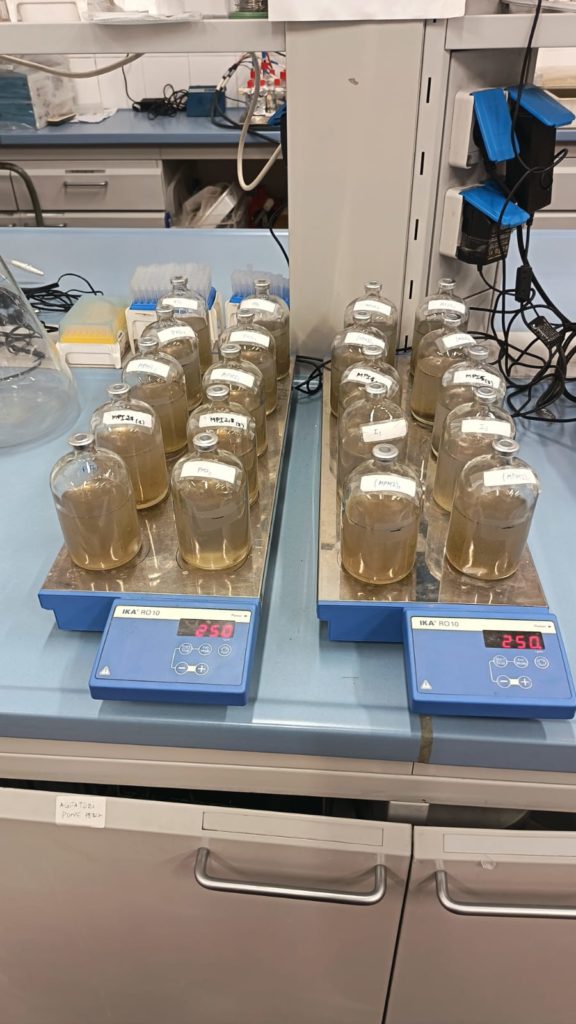
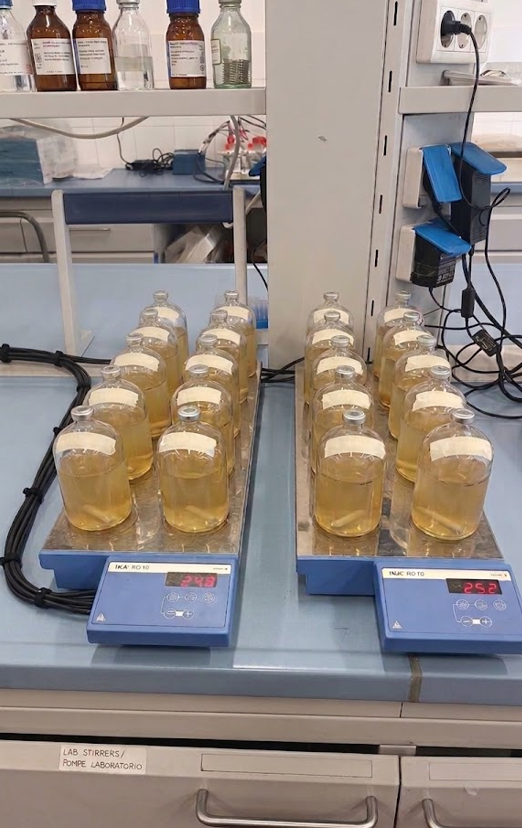
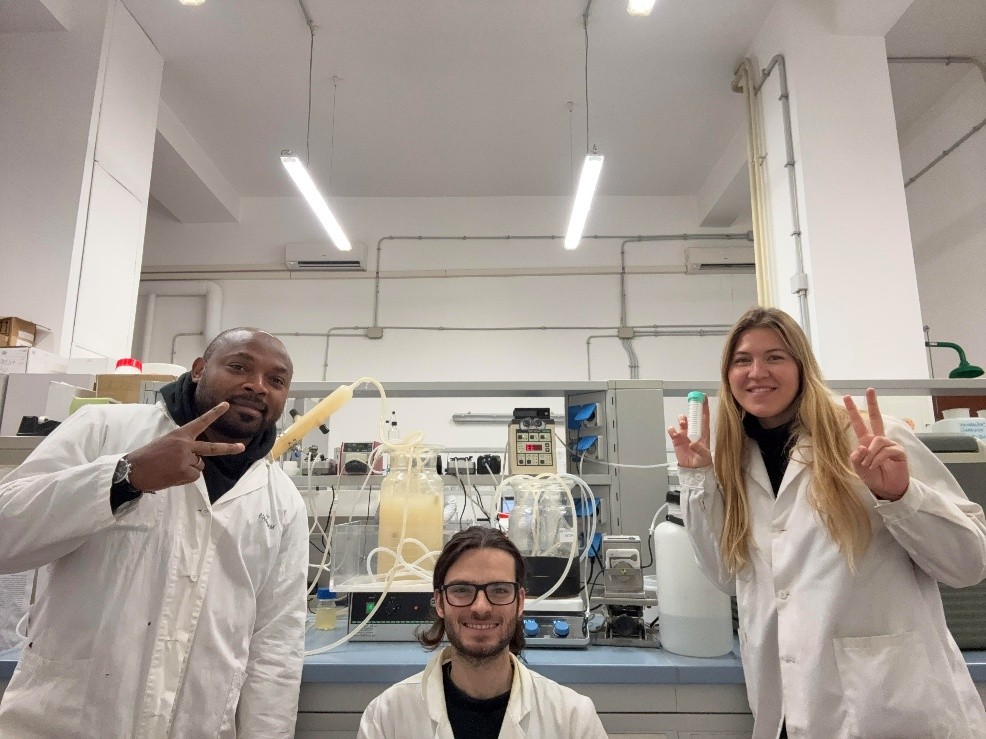
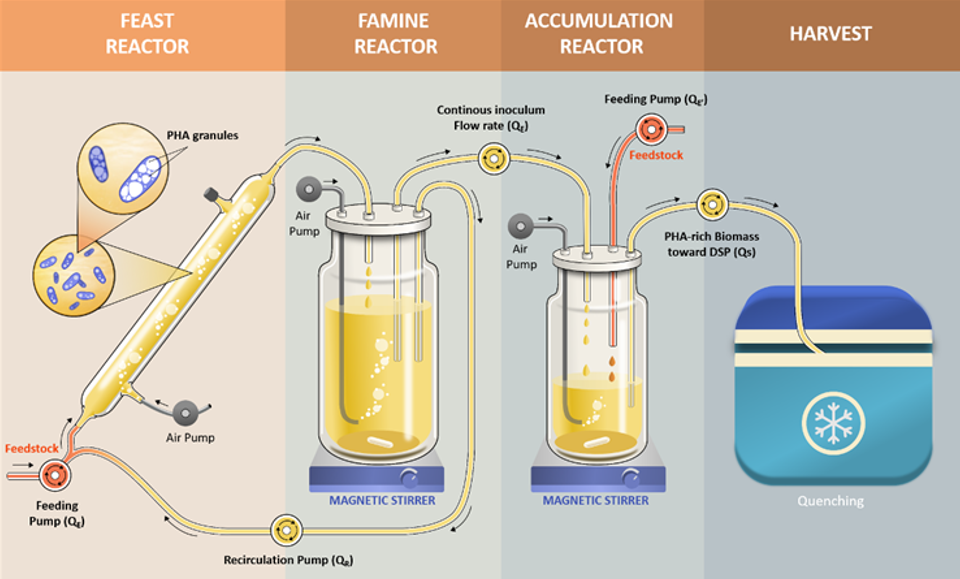
Together, we realise the complete path, from organic waste pre-treatment to bioplastics production. Lionel Nguemna (Post-doctoral researcher) manages the first step, known as the upstream phase, by focusing on the breakdown of agricultural waste, through fermentation. Luca di Leva (PhD student) oversees the second step, the production phase, by focusing on the study of a continuous process to produce PHA using a mixture of different types of bacteria (FIG2). Finally, Gaia Salvatori (Post-doctoral researcher) is responsible for the last step, in which PHA is extractedfrom the bacteria (FIG3).
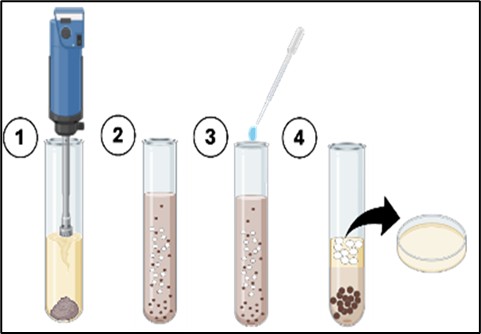
1) Mechanical disruption of dry biomass through homogenization in Green Solvent at swelling temperature (ca. 60°C)
2) Swelling of PHA granules at 60 °C to easily separate them from biomass
3) Addition of thickening agent
4) PHA-rich phase withdrawal and polymer drying
Waste valorisation with Zero Pollution
Unlike traditional plastics, PHA is fully biodegradable in marine and soil environments. By implementing circular economy principles, we reduce our dependency on fossil fuels and protect biodiversity. It is not just about making a better ‘plastic’; it is about creating a healthier planet for future generations. Our goal is to bridge the gap between laboratory research and real-world usage, ensuring these sustainable materials become a standard in our homes.
by Lionel Nguemna (Postdoc), Luca Di Leva (PhD Student), Gaia Salvatori (Postdoc), members of the EU project AgriLoop