Developing industrial bioprocesses is a costly and high-stake challenge. What if we could explore hundreds of possible designs on a computer to guide experiments and support smarter decisions? That’s exactly what our “computer lab” makes possible.
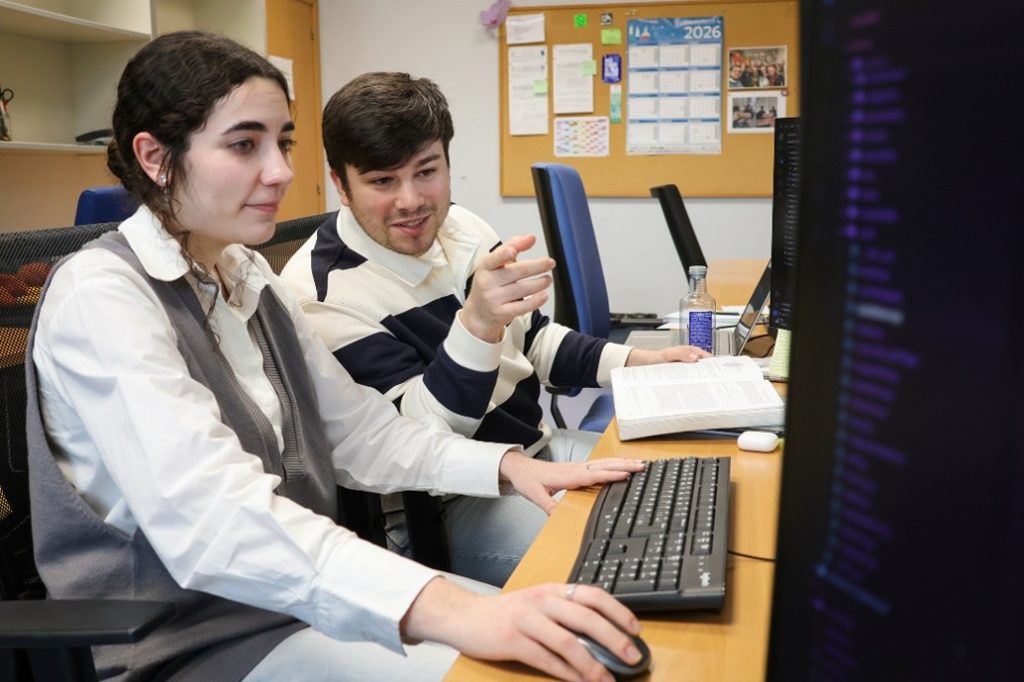
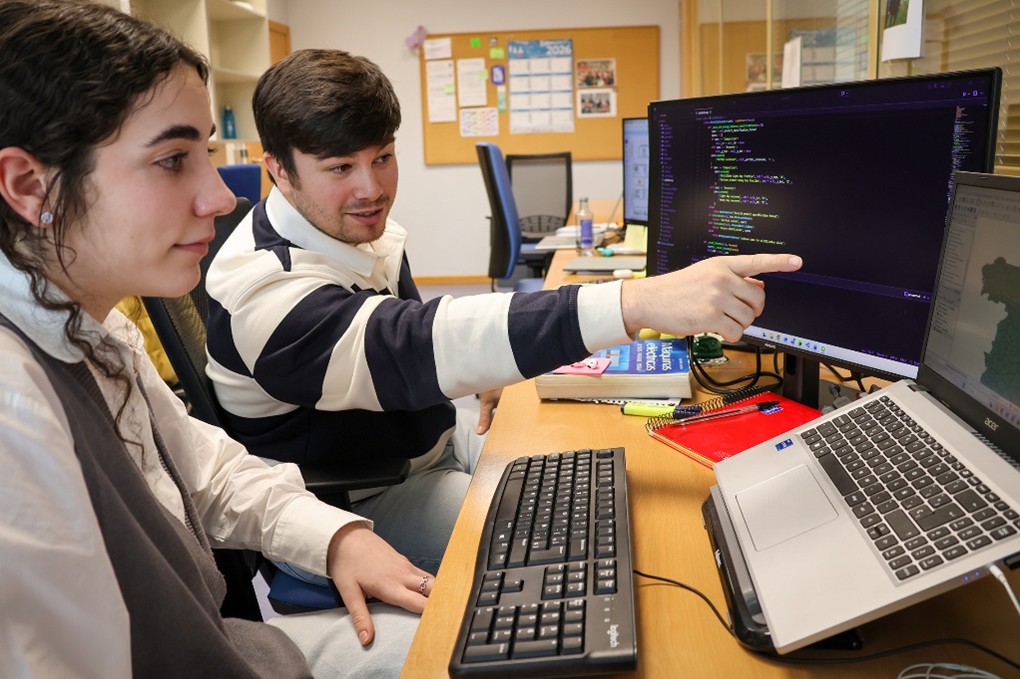
Our lab doesn’t include pipettes or flasks—it’s entirely based on lines of code, computers and some cups of coffee a day to power the coding team.
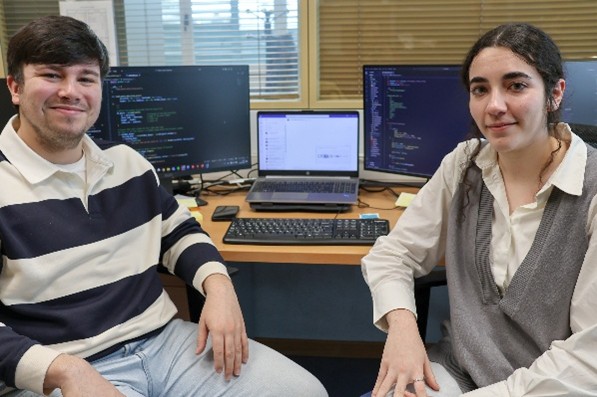
We are second-year PhD candidates at the University of Santiago de Compostela (USC), working within the BioGroup team at CRETUS. Isaac is supervised by Alberte Regueira and Miguel Mauricio-Iglesias, whose research aim is creating mathematical models for bioprocesses. Andrea’s research is jointly supervised by Miguel and Almudena Hospido, whose work uses Life Cycle Assessment (LCA) to assist decision-making.
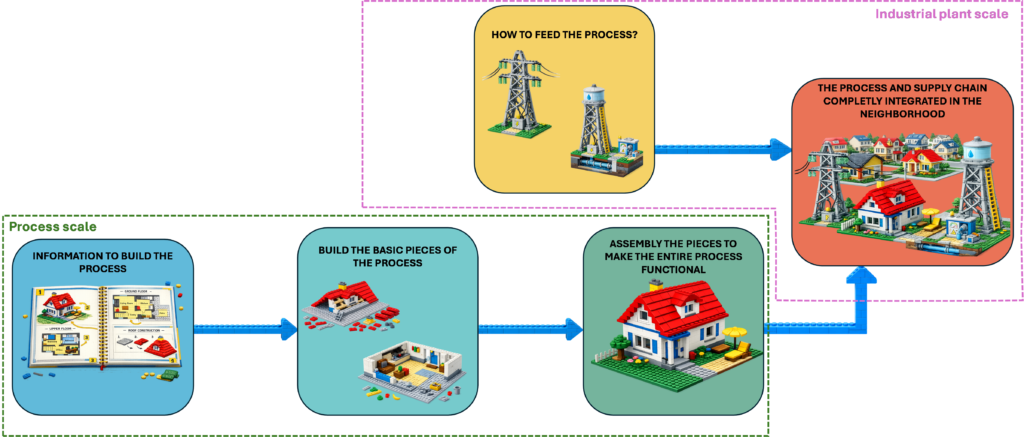
As is reflected in the green box of Figure 1, Isaac is assisting the development of the ‘Lego’ pieces that make up a biorefinery (i.e. the novel processes that are under development), through detailed mathematical models. These models are a group of equations that represent the physicochemical and biological phenomena (reactions, separation, energy consumption, etc.) taking place on each process equipment, making it possible to simulate their behaviour and learn how to improve them. You can think of them as a “digital twin” that mimics how every unit operation behaves, allowing us to test and improve different process configurations and finally predict which designs will work best economically. For example, instead of experimenting in real reactors, Isaac experiments with virtual ones.
Once all Isaac’s ‘Lego’ pieces are put together, Andrea’s work is to take a bird’s eye view on the predicted biorefinery to include its surroundings: from what happens inside the processing plant to how the entire supply chain works (pink box in Figure 1).
This means considering different options of raw material suppliers, transport distances, storage times or customer demand in relation to the specific processes taking place within the biorefinery. This approach aims to find the best configuration not only in economic terms, but also in environmental performance through LCA. You can think of this tool as “glasses” that focus on the environmental burdens along the entire life of a product.
With the supply chain models we can also explore where the plant should be located to connect with other industries and establish symbiosis; one company’s waste becomes another’s raw material, contributing to circular bioeconomy. In a broader sense, they act like a roadmap of the optimal pathways for moving the biomass.
With all this, mathematical model approaches are key to addressing the challenges that arise during the development of bioprocesses. They guide decision-making to bridge the gap between laboratory results and industrial implementation.
How can we improve the performance of a separation?
What is the impact of transportation cost on process profitability?
Which catalyst is the best for a given reaction?
Will the plant meet the emissions targets in the future?
Our digital models provide a way to answer these questions before committing time, money or materials in the real world, helping researchers see what works and what doesn’t, and where to focus their efforts.
Studying how tomato waste and brewer’s spent grain, a common waste from beer making, can be transformed into valuable products
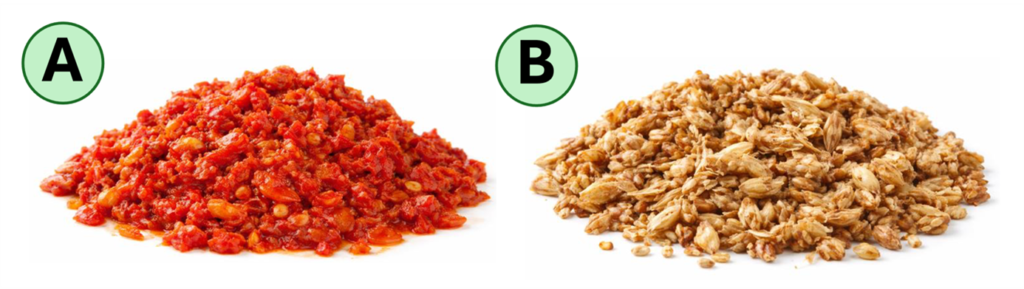
First case study: The mathematical models created showed that improving solvent recovery and enzymatic treatment can make a big difference in the laboratory processes developed by the AgriLoop partners. These areas represent key opportunities that can lead to large gains in industrial viability.
Second case study: We demonstrated that traditional valorization of these waste streams into animal feed currently offers the best economic and environmental performance. However, higher value-added routes to produce bioethanol or bio-carbons could be competitive, especially if process synergies are achieved. This means designing processes where “nothing goes to waste”, much like a well-organized kitchen where leftovers from one meal become ingredients for the next day’s dish.
Within a circular bioeconomy and with a lower carbon footprint
By helping promising biobased technologies and biorefinery supply chains reach the market faster and with greater economic and environmental confidence, our research contributes to a future where everyday products are increasingly made from renewable resources and waste streams instead of fossil fuels.
We could say that our job is like using a virtual fitting room: we can try many different ‘outfits’ for a biorefinery and see which one fits best, before sewing anything in the real world.
Our work isn’t just about writing equations on a screen
It aims to have real world impact helping to create a cleaner, healthier environment by reducing waste and emissions, while contributing to the development of smart digital tools.
Imagine a world where your protein shakes or the coatings on your packaging are made from tomato waste, or where your skincare cream is enriched with natural antioxidants recovered from brewer’s spent grain. Our models help us determine whether these processes, researched in the AgriLoop project, could reach the market and what changes would need to be made to make that happen.
Next steps
Together, our next goal is to create a free online tool that allows researchers, students, and decision-makers to explore and test biorefinery processes and supply chain scenarios.
Want to know more?
You can read more about our published research here. Further information will also be published later in the year as part of project deliverables 2.5, 3.3 and 4.4.
You can find out more about our team and research at the BioGroup website, or in our GitHub repository, where we share our code. Even if you’re not a programmer, it’s a great place to see the digital tools we develop. For example, OUTDOOR is an open-source tool developed within AgriLoop project by our colleague Dr. Lucas Van der Hauwaert. This software is designed to figure out the best product and route technology to valorize a residue.
by Isaac Leis-Garrote and Andrea Penedo, PhD candidates facilitating sustainability and circularity in novel biorefineries through mathematical modelling, members of the EU project AgriLoop