
Dr Rita Escórcio / Material made with cutin building blocks and cellulose
Have you ever wondered what became of the seeds and peels of tomatoes when you were shopping for tomato sauce?
Tomato leftovers (peels, seeds and stems) contain a lot of nutrients and interesting molecules that can be valorised instead of being discarded by the industries.
What’s the research about?
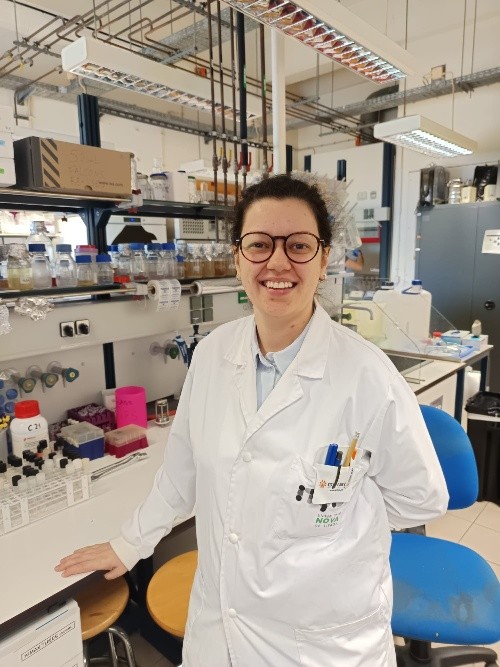
My name is Rita Escórcio and I’m 4th year PhD student at the ITQB NOVA, Lisbon. Along with my supervisors, Dr. Cristina Silva Pereira and Dr. Carlos Afonso, I’m part of the AEM lab (Applied and Environmental Mycology) at the MOST-MICRO unit (ITQB NOVA).
The research I’ve been performing in the Cristina Silva Pereira’s lab in the last 8 years was to valorise one of the elements that exist in the peel of the tomato: a plant polyester named cutin. Cutin is the backbone that structurally preserves the integrity of the tomato peel (also present in many other fruit peels). The localisation of this natural polyester in the peel is correlated with many interesting properties that protect the fruit from external dangers: bacteria, fungi, solar UV radiation, reduces water loss, etc.
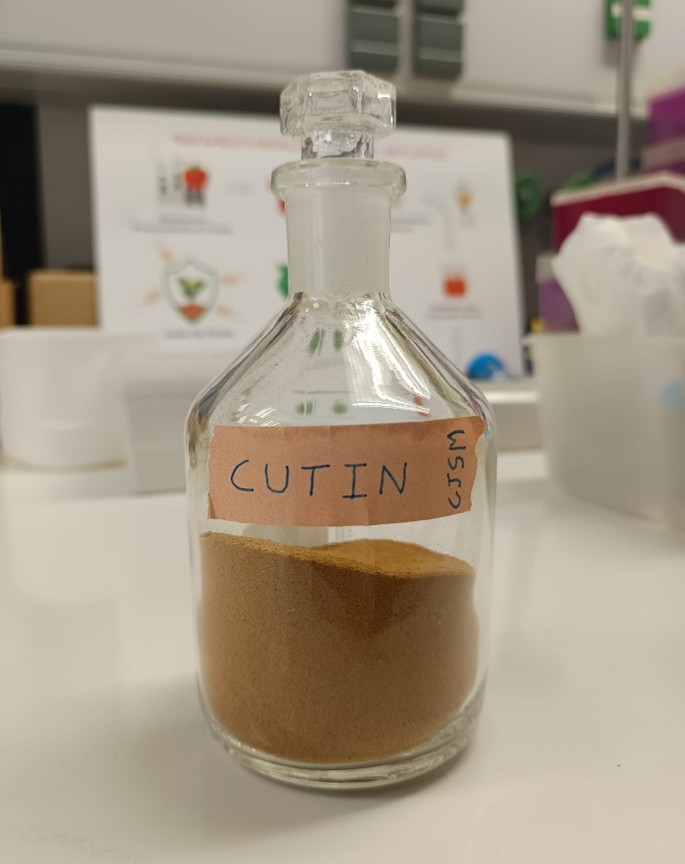
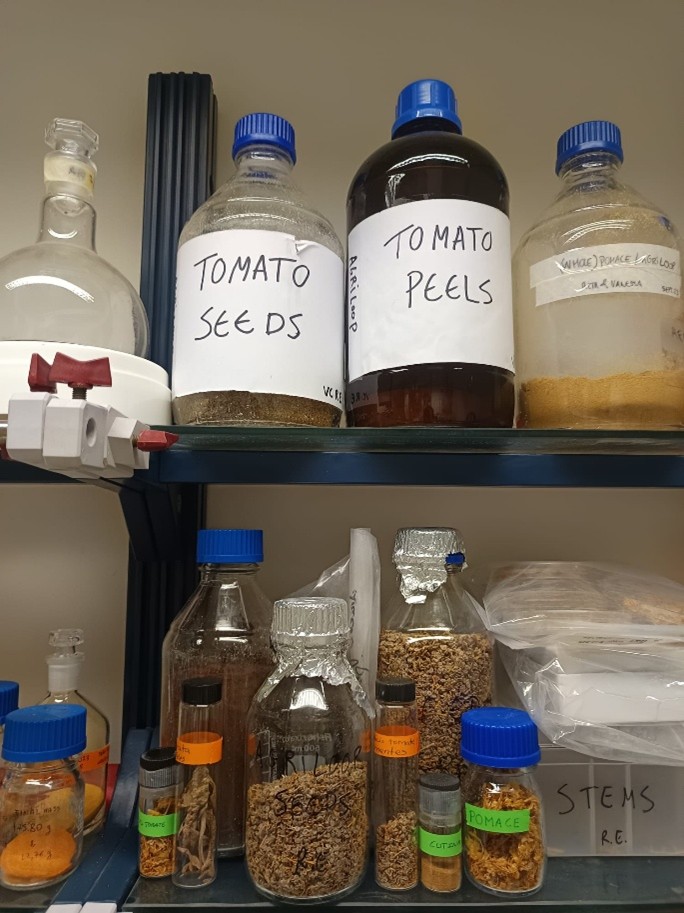
What cutin looks like after the grinding step and the process to isolate it from tomato peels / Storage of tomato leftovers.
The main goal of my research was to use tomato leftovers (industrial residue) as a source of cutin and investigate one of its most underappreciated properties: the antibacterial capability of the cutin building blocks. The results obtained during my PhD can promote the use of secondary feedstocks (tomato leftovers) and showcase that we can increase the circularity of biomass rather than discarding it. The study of secondary feedstocks can also help to create jobs and new products for the market!
This research was built and related to some in-house projects on plant polyesters (e.g. AgriLoop) and I‘ve collaborated with some post-docs in the team, namely: Artur Bento, Carlos Moreira, Vanessa G. Correia, Nádia Ribeiro and more recently Adilson Pereira.
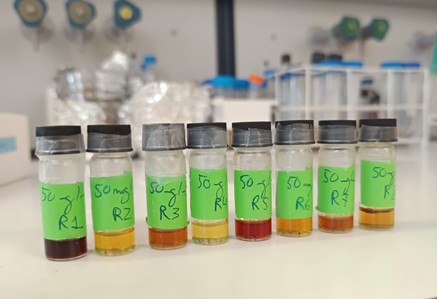
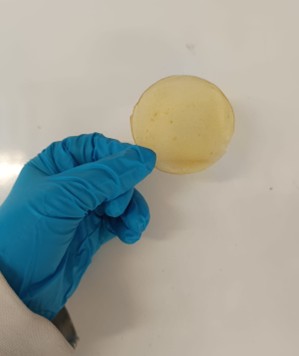
Different mixtures of cutin building blocks dissolved in ethanol
Key findings and impact
If you had to imagine the cutin polyester, you would visualize a lego wall that is built by different lego pieces. Cutin can have more than ten different pieces, and they vary in proportion and composition accordingly to the fruit maturation stage and between different fruit species.
My work followed 2 strategies: 1. deconstruct the cutin wall in smaller pieces and exposed them to bacteria (to evaluate if they could kill) and 2. mix these smaller pieces with cellulose (another plant constituent) building a bio-based material prototype.
One of my discoveries was that I could effectively kill the bacteria Staphylococcus aureus when exposing the pieces directly. Another discovery was that the material prototypes that I build could kill both Staphylococcus aureus and Escherichia coli (in different degrees) and prevent the bacterial adhesion of the latter. These two bacteria species are commonly found in food spoilage, and this work can be useful to explore the use of cutin building blocks as an active ingredient for coatings or materials to increase the shelf life of food.
Note: don’t worry you can eat tomato peels! The process that I use to deconstruct cutin to obtain the building blocks that are antimicrobial is very different than the process that happens on your digestion.
What’s next and how to stay updated?
The next step is to apply this knowledge to grape leftovers (derived from winemaking). More work is necessary to understand what are the pieces that provide antibacterial activity and if they have synergy between them.
Beyond research you can also follow “Bioeconomy Matters”, a podcast that delves into various bioeconomy-related subjects through interviews; it’s one of my passions outside of work.
Scan the QR code to visit the podcast

by Rita Escórcio, PhD Student at ITQB NOVA, member of the EU project AgriLoop