5 December 2025—The AgriLoop Project has unveiled a central consensus document detailing a practical pathway for advancing the circular bioeconomy in agriculture. The framework, designed to enable the transformation of agricultural byproducts from low-value waste into high-value chemicals, proteins, and materials, provides a foundational blueprint for policymakers and industry leaders in Europe and China.
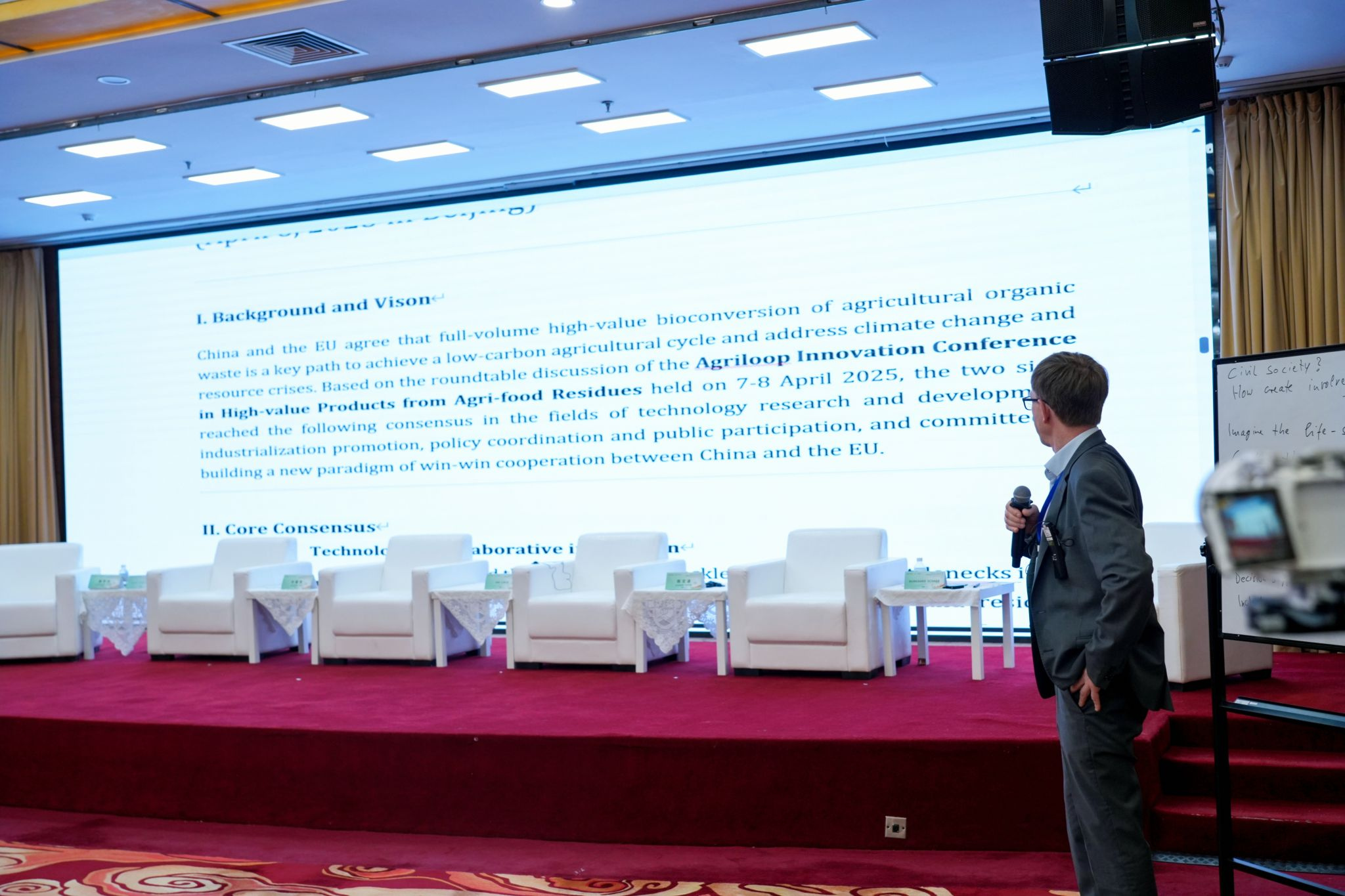
The AgriLoop consensus on China-EU priorities for high-value products from agri-food residues (the Agriloop consensus) was formalized at the multi-stakeholder conference held in Beijing in April. It brings together the collective knowledge of 64 leading research institutions, policy experts, and industry partners from both regions. Signed by all project partners, the AgriLoop consensus will be distributed to high-level government officials in both the European Union and China to advocate for regulatory reform and accelerate much-needed developments in global circularity.
Unlocking agriculture’s hidden potential
The framework arrives as governments worldwide intensify efforts to build sustainable bioeconomies, with the European Union among those advancing comprehensive strategies to transition away from fossil-based resources. The AgriLoop consensus directly responds to these policy priorities by providing concrete implementation pathways for the agricultural sector.
“We’re sitting on a significant resource that is currently disposed of or used in low-grade applications,” said Nathalie Gontard, AgriLoop’s joint project coordinator and Research Director at INRAE. “Approximately 50% of all harvested crops become agricultural residues—that’s billions of tons of underutilized materials that could be converted into valuable feedstocks for products ranging from biodegradable plastics to sustainable protein alternatives in order to substitute petrochemical or food-based equivalents.”
The consensus outlines a joined-up strategy for converting agricultural side streams—including cereal residues, tomato peels, and fruit processing waste—into a portfolio of high-value bioproducts. These products include microbial proteins for sustainable food alternatives, functional food ingredients, and biodegradable bioplastics (PHAs) that naturally decompose in marine and soil environments.
Four pillars of implementation and policy advocacy
The AgriLoop consensus provides a unified approach across four strategic areas, starting from crucial scientific advances and moving further to tackle policy and market challenges:
- Building capacity and public support: Launches the China-EU Young Scientists Exchange Programme to develop talent and implements public education efforts using relatable examples, such as transforming peanut meal into plant-based meat substitutes.
- Advancing scientific collaboration: Establishes the China-EU Joint Laboratory for High Value Biorefining and mandates the sharing of intellectual property and research data between teams to accelerate the transition from discovery to application. Improves interdisciplinarity and the long-term anticipatory capacity of research to better balance between short- and medium-term mitigation actions, and long-term crisis anticipation.
- Creating market pathways: Proposes a joint China-EU certification system for low-carbon, circular products to simplify cross-border trade and establish global standards. Implementation will be validated via pilot demonstration sites in Bordeaux, France, and Shandong Province, China, linking farmers, processors, and researchers in a sustainable business model.
- Removing regulatory roadblocks: Demands that governments integrate agricultural residue transformation into carbon neutrality strategies and provide critical incentives, such as green tax benefits. Notably, the framework challenges the EU’s current regulatory classification of naturally produced, biodegradable bioplastics as “single-use plastics,” arguing that policies designed for a linear economy are inadvertently stifling critical sustainable innovation.
Professor Aimin Shi, joint project coordinator and professor at the Institute of Food Science and Technology at the Chinese Academy of Agricultural Sciences (IFST-CAAS), emphasized the collaborative outcome: “What we’ve accomplished with this consensus agreement is a concrete pathway from agricultural challenges to economic opportunities. This isn’t just a vision, it’s a practical plan for how innovative science, thoughtful policy, and genuine international partnership can create a sustainable circular bioeconomy. We are not only setting a new standard for collaboration between China and the EU but also providing a replicable model that others can follow to unlock the hidden potential in their own agricultural systems.”
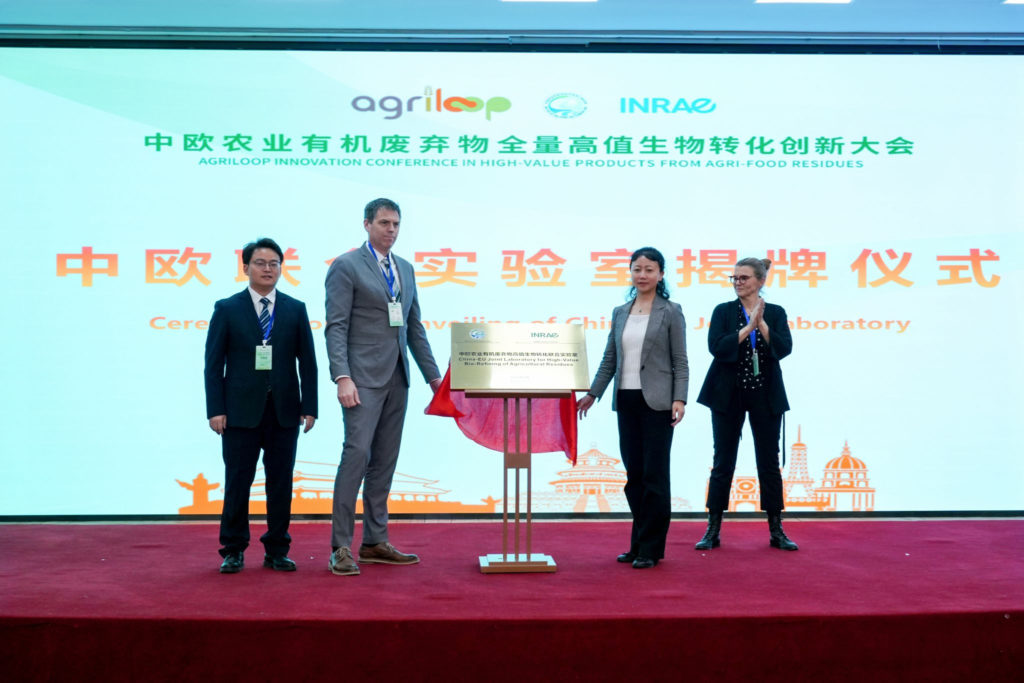
To show immediate commitment, two initiatives were launched during the Beijing conference: the establishment of the China-EU Joint Laboratory and the recognition of five Chinese companies as demonstration bases for new technology testing in commercial environments. A joint working group comprising agricultural officials, leading research institutions (INRAE, CAAS), and business representatives will now be established to synchronize policies and oversee rapid technology deployment.